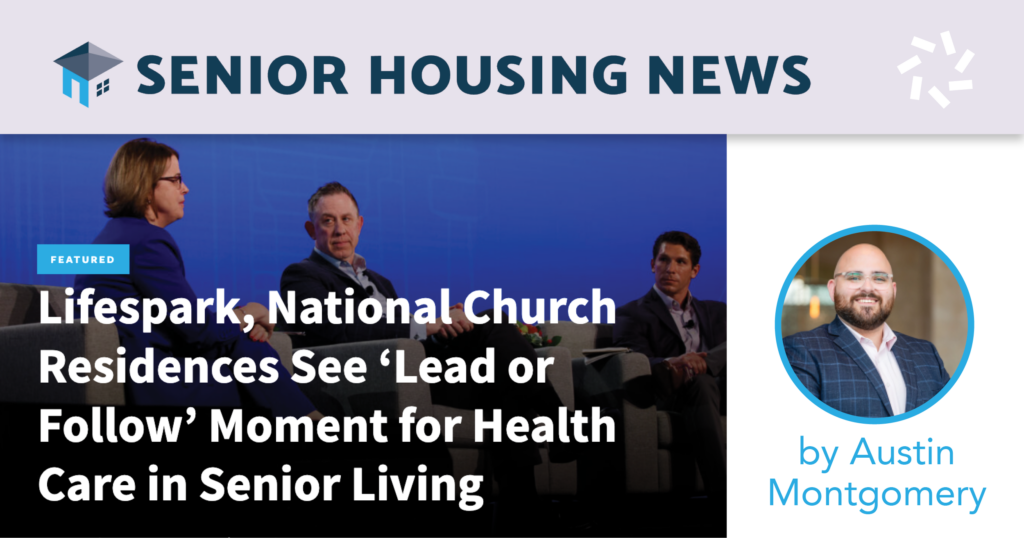
Hot off the press from the NIC Conference this week, Senior Housing News reporter Austin Montgomery shared his takeaways from a panel Joel Theisen, Lifespark CEO, was on with Anne Tumlinson, ATI Advisory CEO, and Jacob Swint, National Church Residences Vice President of Strategic Growth and Operations Support.
In it Austin said, the senior living industry stands at the precipice of a big opportunity in health care – if they are bold enough to realize it and take action.
Providers face growing pressure to shift from fee-for-service models toward value-based care arrangements as the Centers for Medicare and Medicaid Services (CMS) aims for all Medicare beneficiaries to be in accountable care organization (ACO) arrangements by 2030.
For more than a decade, industry stakeholders have positioned value-based care as the inevitable future of healthcare reimbursement. Hospitals and insurers have been in the driver’s seat with regard to that future, but they have not always done well. Now, senior living stands a chance to take the wheel.
Who drives the value-based care ‘car’ matters in 2026
Historically, CMS has given the keys of the proverbial value-based care vehicle to hospitals and large health insurance plans, according to Lifespark CEO Joel Theisen. But hospitals historically excel in acute care or “sickness care” and asking them to lead health and prevention spurred misalignment from the get-go.
“They drove the car into the ditch,” Theisen said during the NIC panel due to high costs and limited success in transforming care without shifting toward preventative care.
CMS then turned to large health plans and Medicare Advantage (MA) insurers because “they don’t know where else to put it,” Theisen said. Insurers were expected to “muscle” value-based care efforts but they too “drove the car into the ditch.”
Now, senior living operators have an opportunity to both improve their services and reap some of the financial outcome. It’s a kind of “lead or follow” moment, he said.
St. Louis Park, Minnesota-based senior living provider Lifespark operates a model called COMPLETE Senior Living (edited) which assumes risk for patient outcomes. The program features a “complete life record” that spans primary care, home health and hospice services in addition to a newly introduced in-home urgent care and emergency response team.
As Theisen sees it, senior living providers are in a unique position due to the intimate relationships they create in communities, understanding resident habits, preferences and health needs.
“You know their love, you know their families,” Theisen said. “Who in the hell do they want to give the keys to? Do you want to let them come and eat your lunch and have it, it’s going to happen.”