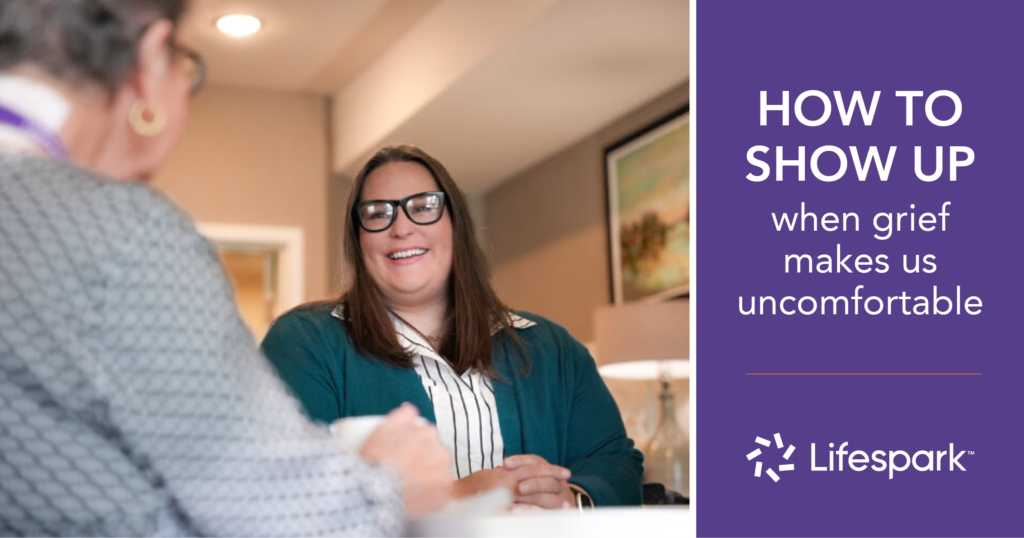
We expect grief when someone dies. But grief is also tied to change and transition. Losing friends, connections, and the life we used to lead can bring immense feelings of sadness.
Grief can make caregivers and family members uncomfortable. Especially when grief is directed at them after a move to senior living. But grief is not a sign that the move was wrong. It’s a sign that their life before this mattered deeply.
“My own grandparents sold their home and moved to senior living,” says Austin Felber, Director of Chaplaincy at Lifespark. “They felt isolated not because the community was bad, but because the loss was real. They didn’t just move their home; they moved away from a life they had built.”
Many well-meaning people try to pull others out of their grief too quickly. What helps most is not trying to fix it but acknowledging it. Allow your family member to express themselves without rushing. Ask them questions.
You can say things like:
- “I know this is a big change.”
- “It makes sense that you miss your home.”
- “I’m here with you while you find your footing.”
You can also borrow from the Lifespark chaplain team’s questions:
- What matters most to you right now?
- What’s it like to be you today?
- What do you feel most connected to in your life?
- Who in your life helps you feel that way?
- Do you want me to come back for a visit with you?
“It’s surprising how infrequently people ask seniors direct questions about their actual experiences,” says Austin. “Seniors are typically very honest when asked.”
Alone vs. Isolation
Family members often worry about seniors spending too much time alone. But being alone and feeling isolated are very different experiences.
Some seniors genuinely enjoy solitude and have waited their whole life to read books undisturbed. True self-isolation appears alongside other observable mental or emotional health concerns.
Again, the only way to distinguish preference from distress is to ask directly.
When seniors feel seen in their grief, they’re more able to connect, participate, and eventually build a new sense of home.
Lifespark’s chaplain team addresses grief, loneliness, and loss of connection among seniors through person-centered spiritual care. This investment reflects our commitment to helping residents age magnificently.
To learn more about spiritual care at Lifespark, go to: Senior Living Spiritual Life.