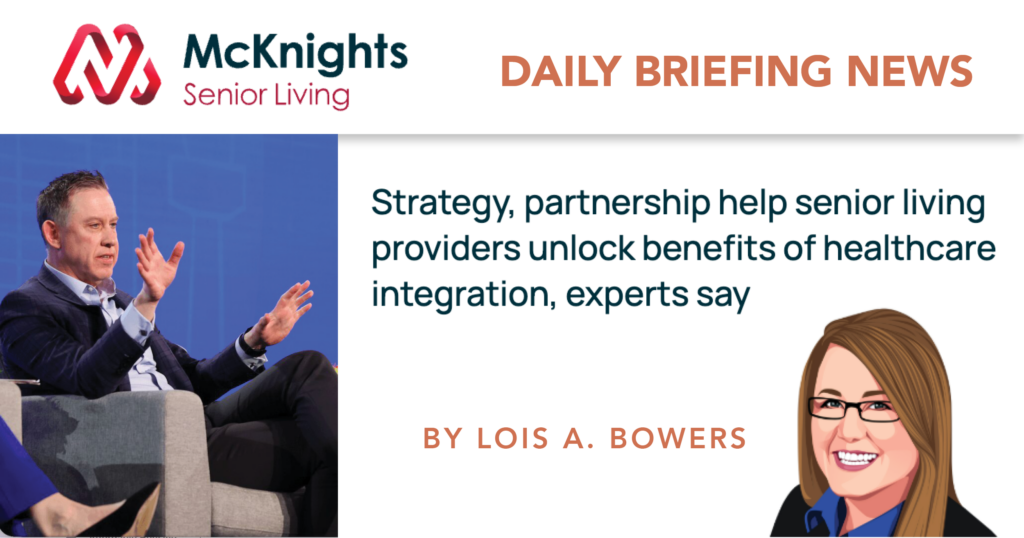
According to Lois Bowers, reporter for McKnights Senior Living, said “Senior living providers that integrate healthcare more directly into their operations can boost revenue, resident health outcomes and family and employee satisfaction, but regardless of their level of involvement in value-based care, they must establish a strategy.”
That’s according to experts speaking last week during a session at the National Investment Center for Seniors Housing & Care’s 2026 Spring Conference, who also shared tips for those wanting to get more involved.
Two models for success
Both Lifespark and National Church Residences made the decision years ago to integrate healthcare into their senior living operations and participate in value-based care.
Joel Theisen, founder and CEO of St. Louis Park, MN-based Lifespark, called it “pre-acute care.”
The company had geriatric care management, private-duty skilled home health, a medical group, hospice and palliative care, and transportation businesses when it bought a 34-property senior living community portfolio in Minnesota and Wisconsin, he said. Today, the portfolio has grown to 50 communities, with overall occupancy of 95% and net operating income of more than 30% in every building, Theisen added.
“People say, ‘I’m hospitality’ or ‘I’m healthcare,’ [but] you can do both,” he said. Taking advantage of value-based care opportunities, Theisen added, “unlocks a whole pot of money.”
Residents are spending money on senior living rent and money on medical care, Theisen said. Senior living providers that aren’t directly involved in healthcare are only “getting half of the bucket of the money” despite “doing all the work.”
Senior living providers, he said, “should be leading the way, not letting acute care drive the bus on our members, our residents, people who trust us and love us, and we love them. To be able to deliver this integrated model? That’s really important.”